
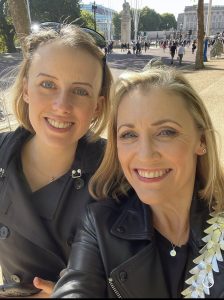
Episode Guest -Nicola Nuttall
Since losing her daughter, Laura, to the aggressive brain cancer glioblastoma, Nicola Nuttall has become a passionate fundraiser, speaker and campaigner, fighting to raise awareness of the disease.
Her book ‘The Stars Will Still Be There’ published by Harper Collins, is an unflinchingly honest account of how the family coped with Laura’s devastating diagnosis and helped to make the most of her remaining time, reminding us all to live life to the fullest and ‘Be More Laura’ every single day.
Nicola runs The Be More Laura Foundation which funds vital research in the hope of finding kinder, more effective treatments for glioblastoma and works with organisations such as Our Brain Bank, Brain Cancer Justice and The Brain Tumour Charity to call for change in how brain tumours are treated, particularly in young adults.
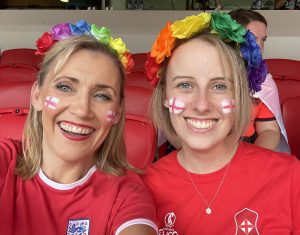
Summary:
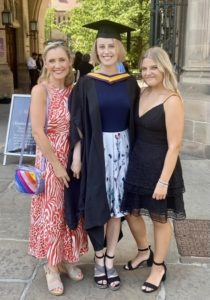
Nicola shares her heartbreaking story of her daughter Laura’s bravery and determination after being diagnosed with aggressive brain cancer Glioblastoma. How Laura defied the initial terminal prognosis timeline, the families fight for treatment to keep Laura alive. Nicola shares stories of Laura’s bucket list which went viral. How Laura became a young ambassador for the Brain Tumour Charity and re-enrolled at university whilst having Chemo and completed her degree course and graduated with a 2:1.
Nicola shares the need for the narrative to change in terms of more support and recognition for sibling loss and that her other daughter Gracie now works for Sibling Support UK to help other siblings like herself.
Resources:
Please find some of the resources mentioned in this episode:
‘The Stars Will Still Be There’ Book by Nicola Nuttall available on Amazon
Follow us on:
Episode 22 Transcript:
Be More Laura
[00:00:00] This is the Bereaved Parents Club podcast. It’s a club none of us want to be members of, but here we are. My name is Tracy, and I am a bereaved parent. This podcast is for all of us to share and celebrate the stories of our children and offer support to each other. Each episode will explore topics that have relevance to us as we navigate the world as bereaved parents.
Whether your loss was last week, last month, last year, or even last century, you are welcome here. And whether your child was a baby, a youngster, a teenager, an adult, or even a parent themselves, you are welcome here. Please be aware that each episode will deal with themes of death and loss.[00:01:00]
On today’s episode, I will be joined by Nicola Nuttall, mum to Laura and Gracie. Nicola’s daughter Laura died of a brain cancer known as glioblastoma. Please be aware in this episode you will hear about the treatments and operations Laura had in battling this aggressive cancer, as well as the incredible legacy and research that lives on in her name.
So today we are delighted to have the opportunity of talking with Nicola Nuttall, Laura’s mom, known as ShitScaredMom on social media, and sharing Laura and her incredible legacy, Be More Laura, and Nicola’s book, The Stars Will Be There. So welcome, Nicola. Thank you. [00:02:00] Thank you very much for having me. No, thank you very much for joining us.
And I just wondered if you would like to start by sharing your story of Laura. Oh, it’s a long one. So, uh, Laura was 18, and she’d just done her A-levels. She’d actually managed to secure an internship in Chicago working for the governor in the midterm elections, and she did this just by sending off loads and loads of emails until eventually somebody replied to her.
And she saved up for her own ticket, and she told us that she was staying, uh, with the uncle of a friend that she’d met at a university summer school. And so that was great, and she went out. She was out there for, I think it was eight weeks, and it only turned out much later that she was actually renting the basement from a Colombian family.
Oh my God. But she obviously knew that we wouldn’t have, we wouldn’t have gone for that. But she had a brilliant time, and while she was there, she got her A-level [00:03:00] results, and she got the three As that she needed to go to King’s College London to study international relations, and she was adamant that that was it.
She was gonna be a city girl. And she cleared out her bedroom so there was not a thing left in it, not a hanger. Everything went to the charity shop, and she just basically said, “Rent out my room. I’ll be back at Christmas, but I’ll sleep on the sofa.” And I was quite heartbroken that she was leaving without so much as a backward glance.
So we took her down to London, moved her in, filled her fridge, made the bed up, and I obviously cried all the time because I was so devastated that that was it, and she was gone. But then a couple of weeks later she came back ’cause she missed the green, and she missed the north, and, and, and we went on a walk.
And then she came back for a family birthday in October as well, which I was really surprised at. But she mentioned at that time that she’d had a few headaches, and I thought, “Oh, you’re getting migraines. I get migraines. And I, I’m sorry about that. You’ve got… You’ve l- lucked out in the genetic lottery there.”[00:04:00]
But she also said, “I was, uh, sitting on my bed, and then I woke up, and I was on the floor, and my face was bruised, and my face was wet.” And I… It didn’t really ring any alarm bells at that point, and I just said to her, “Well, when you register with your new GP in London, make sure you tell them about that.”
And she did, and, and they said, “Oh, we’ll just keep an eye on it.” And while she was down in London, she joined the Royal Navy University unit, RNU, and they sent her for a medical. But she wasn’t worried about that because she’d run her first marathon whilst also doing her A-levels and her advanced driving.
And part of that medical was an eye test. So she nipped into Boots on the way to a lecture, and they said, “We can’t pass you because there’s swelling behind your eyes, something called papilledema. So we’ll refer you to Moorfields Eye Hospital.” And she went there and they said, “We can’t really see anything wrong, um, but we’ll refer you to a neurologist.”
But the next day, [00:05:00] I’d spent obviously a night worrying about what papilledema was and what that meant, and the next day I phoned her to say, “I think you should come back. I think we need to, you know, get you looked at.” But she didn’t pick up the phone, and the phone just rang out and rang out. And eventually she did pick up, but she was in bed with the worst headache of her life and was being really sick.
So it was really kind of late into the evening by the time we made contact with her, and Gracie and I got the last train down from Preston to London. She wasn’t answering her phone again. We had to get the university hall security guard to open her room to let us in, and she was curled up on the bed and looked really, really unwell.
So we asked where the nearest A&E was, phoned a taxi, and took her to Homerton, where she was, um, sent for a CT scan at 3:00 in the morning. And the doctor came back in and, and she said, “Have you, have you got the chairs in here?” And I went, “Oh, I’m sorry. We, yeah, we’ve got the chairs. Do you need them?” And she went, “No.
I, I need you to sit [00:06:00] down.” And she said, “Laura’s got a brain tumor. It looks like it might be two. Um, but we’ll do another MRI and a C- a further CT scan tomorrow morning. So go home, tell your family and, and we’ll take it from there.” Well, because she was so young and, and because of the way that it presented, they weren’t sure whether it was a secondary brain tumor from a primary cancer or whether it was primary brain cancer.
So they basically did a mammogram. They examined every inch of her skin, and couldn’t find anything. So we just had to bring her home. So we emptied that university room that we’d only been down to six weeks before, emptied the fridge, took all the posters down and brought her home. And then we needed to find a medical team who would be prepared to operate, ’cause this was quite a big tumor by this point.
We found a doctor at Salford who said that he would operate, and w- it would be in two weeks’ time. And on the day of the surgery, [00:07:00] we went in to wake Laura up because we had to leave very early for the slot at Salford, and she was staring at the ceiling. And I thought, she’s just really anxious about this, and she wasn’t really talking.
And then we realized she was actually unconscious with her eyes open, which was the most terrifying thing. And she had a huge tonic-clonic seizure, and we had to phone an ambulance. And if that had happened while she was on her own in a university room in London, she’d have died that day undoubtedly, because she didn’t regain consciousness at all that day.
And the surgeon was trying everything he could to wake her up, and we were trying to get through to her just to get some kind of response, but there was nothing. So he did operate, but we knew at, by that point things were pretty bad and we didn’t know whether she would have lost the ability to speak or cognition at all, or whether
We just had no idea whether she’d make it through and, and what kind of state she’d be in if she did [00:08:00] And he kept her in an induced coma overnight. Said it had gone, the debulking, because you can’t really remove a whole tumor, but you can debulk it and take the center out of it. And the next day he brought her around at lunchtime, and I squeezed her hand three times to say, “I love you.”
And she squeezed back four times to say, “I love you, too.” And we were like, “Yeah, she’s fine. She’s gonna be fine.” And she did. She made an amazing recovery. She obviously had a huge scar that kind of went all the way down where they’d had to peel the skin back to access the skull, which is just ter- a terrifying thought.
And a week later, we went back to find out what, what it was, essentially. And at that point, we were told it was glioblastoma, which I knew was the worst thing we could hear at that stage. And Laura asked the surgeon in this little tiny meeting room, “Can I go back to university this year, or do I need to wait till next year?”
And there was this horrible silence where he knew that [00:09:00] Laura didn’t know how bad things were. I knew that, that she didn’t, and it was just this awful moment. And he said, “I, I’m sorry, Laura, but you’ll never go back to university.” And he said, “Is there, is there anything else that you want to ask me?” And she said, “Yeah.
Do you know that you’ve got your scrubs on inside out?” And, and we went outside with him, and I said, “What, what are you, what are we talking about here? You know, how long do you think she’s got?” And he said, “Without treatment, three months, and with treatment, 12 months.” And she’s 18, and she’s just run a marathon, and she’s just got three As at A level just months earlier.
So it just didn’t make any sense to me that someone as young as 18 was being told that, “Yeah, that’s it. You’ll have surgery, you’ll have radiotherapy, and you’ll have chemo.” And there’s one kind of chemo for brain cancer. Despite the fact that they are genetically hugely heterogeneous, we have one, we have one type of chemo.[00:10:00]
And so after the surgery, she had the radiotherapy, which was obviously full head radiotherapy, attached to a table, pressed her into a, um, a, a A mask that went all over her face, horribly claustrophobic, and chemo that made her sick throughout. Uh, and it was just absolutely brutal. But in that time, we decided that we needed to make the best of what we had, and Laura came up with a bucket list that I shared on social media as ShitScaredMum.
And meanwhile, I was also trying to find other treatments that were available elsewhere in the UK, elsewhere in the world, and, and things that we would have to fund privately because I just couldn’t get my head around that was it. I used to print off papers and take them into the oncologist and go, “What about this?
What about a ketogenic diet? What about this drug? What about th-,” and, and I was constantly coming up with these things and that I’d [00:11:00] read and think, “Well, there’s, there’s some evidence.” Not huge, but I think the attitude to risk when you’re told your daughter’s got a year to live is very different from a clinician’s attitude to risk when they’re looking at things like litigation and, uh
And so we were prepared to do whatever it, it took to give Laura the best chance that she possibly could. We looked at getting a dendritic vaccine, which we could have accessed through an American company in the UK at a cost of a quarter of a million pounds. Oh, my goodness. Um, and started that fundraising process as well.
We, we got to a point where we’d raised some of the money, but not all of it, and then found out that we didn’t have enough fresh frozen tumor available. So without the tumor tissue to make the vaccine, you could have all the money, and it would be completely pointless. So that was absolutely crushing. And then we found a clinic in Germany that offered a very similar vaccine but that was made from white blood cells rather than from tumor tissue itself, and that would involve going out to [00:12:00] Germany every six weeks indefinitely, which at the time just thought, just felt really impossible.
But it’s amazing how impossible things do become possible with determination a- and, and that will to, to try everything to keep your daughter alive, really. I mean, you’ll do anything, anything- Yeah, anything … to keep a child alive. Anything. Even if there’s just a tiny bit of evidence and it … And I mean, our oncologist would say, “It’s not a big enough, uh, group.
It’s not properly peer-reviewed. They’ve cherry-picked the participants.” But if there was just a smidgen of even anecdotal evidence that something would reduce tumor, you, then you would do it. And so Laura was taking things like cannabis oil. We were taking lots of different supplements. There were drugs that I bought myself from India and places, which is, I mean, risks that you wouldn’t take in normal life.
But unfortunately, what I found out was that brain cancer is the biggest cancer killer of children and adults under 40 and gets [00:13:00] less than 2% of the annual cancer research spend. And we’ve had no new treatments for literally decades. And when you realize that actually no one’s going to save you, nobody’s going to help you in this situation unless you do it yourself, it’s a real shock.
‘Cause I kind of, when you read the paper it says, “New cancer treatment,” and, “We’ve never had better survival rates for cancer.” And you start to think, “Well, I know people with breast cancer living really well. I know people with leukemia who’ve gone back to work and work for the police and have great jobs.
I know people with prostate cancer who live really well.” But actually, the rising tide of cancer treatment doesn’t lift all boats, and there are less survivable cancers, and there are hard to treat cancers that are literally in the corner and people are just not interested. Drug companies are not interested, and it’s just too hard.
So the money that they need to invest to make change, they feel is better spent on the big, the big ticket number cancers, the low-hanging fruit. And [00:14:00] I can’t knock that Yeah. I mean, I’m so shocked that since I’ve lost George, I’ve met so many parents whose child has died by this type of cancer as well.
So- Yeah … it’s very, very aggressive, isn’t it? It is. And there are different types of brain tumor, but this, I believe is the most aggressive type of cancer. Yeah. There’s glioblastoma and DIPG, which is a, a, a type of brain cancer that affects mostly children, and it’s the type of cancer that Neil Armstrong’s daughter had back in 1962, and her name was Karen.
And the treatment that she had in the ’60s isn’t really that different from the treatment a child with DIPG gets now. We’re probably better at radiotherapy, but that’s really … And we’re probably better at surgery as well. We have better techniques in surgery. But actually, there are no new treatments for that.
There are some being worked on, things like CAR T therapies and there are some [00:15:00] fantastic scientists trying really hard, but they are underfunded, and it’s just a low priority, certainly for the drug companies. So you’re almost, like, trying to become an expert, aren’t you? ‘Cause you’re just- Yeah … a race against that time to try and see what’s out there, anything to, to save Laura.
Absolutely. And we threw the kitchen sink at it. Yeah. We re- we really did. And Laura was quite prepared. She said, “I, I completely trust you, so if you think it’s worth trying, I’ll do it.” And, and at one point, she ended up being hospitalized because she was really, really sick from the chemo. And our oncologist said to me, “This is your fault because you’re giving her cannabis and you’re giving her all these supplements, and this is your fault.”
And it turned out later that he hadn’t weighed her for six months, so the chemo he was giving her was at a full steroid weight, which was 18 kilos heavier than she was. So actually, it was his negligence that led to her being sick, and it was nothing to do with anything that we were doing. And that was really frustrating, because you want to have 100% [00:16:00] confidence that your clinician knows exactly what they’re doing.
And little by little, you start to think, “Actually, am I more up to date than you are now?” That’s a really unnerving feeling that, that you’re reading more and you’re more invested in finding out what the current treatments are and what the, where the hope is than they are. But they’re, you know, you’re working in the NHS, you’ve got X number of patients to get through a day.
When do you have the time to research really specific cancer types? So it’s not necessarily their fault, but you do need to become an expert, unfortunately. And not everyone has the time or the ability or the means to do that. And that’s really grim to think if you don’t do that, you’re kind of on your own and you have to just trust what’s happening.
But as a result of the media coverage that we got, and Laura was all over our local news, and her story was picked up quite widely, I’d get lots of people [00:17:00] getting in touch with me to say, “What else can we do?” Because they weren’t getting any information, and they were having to reinvent the wheel. So we were then sharing, “Well, I can’t tell you it’s gonna work, but I can tell you what we’ve done.”
So then you end up with a community of people who are all in the same boat. And some of the stories of the way that people have been treated has been so shocking. It’s very hard to get a diagnosis initially, particularly with a young person. And I think it’s an average of five to seven trips to the GP before you’re actually sent for an MRI scan.
And unlike most cancers, brain tumors tend to be picked up in A&E, so that’s more than 60% who are in A&E. So by that point, you’ve already got to quite severe symptoms. And if you think of other cancers that you can actually s- um, screen for, you don’t have that time advantage. You’re not picking things up at, at, uh, grade one and grade two.
If you’re, if you’re rocking up to A&E, it’s gonna be three [00:18:00] if you’re lucky, and, um, grade four mo- more often than not. But it’s time-critical, isn’t it? I mean, everything is so time-critical- Yeah … in this situation. Yeah. Particularly with young people, and almost it seems to be girls seem to struggle with this more.
They get told it’s hormonal, it’s stress. You know- Yeah … go and get your eyes checked is a great piece of advice, but there are lots of reasons why young people have headaches that aren’t brain tumors. But just because it has hooves doesn’t mean it’s a horse, ’cause it is sometimes a zebra- Yeah … or a donkey.
And, we just need to be better at that. But there’s some amazing work going on h- actually locally in Manchester with the fantastic Petra Hammerling, and she’s trying to develop, um, research into diagnosis through tears. So if you could actually diagnose somebody, the likelihood of a brain tumor, using tears rather than, um, scans or biopsies, that would save the NHS so much money, and it would be so much faster So, so these liquid [00:19:00] biopsies, that’s very exciting to, to think that we might, moving forward, have a much better way of, of doing that and actually reducing the time because that can be the difference between a tumor being operable- Yeah
and inoperable, which is key in terms of longevity really. I suppose what’s key as well, isn’t it, is ensuring when they have all these research and programs, that they don’t suddenly run out of money and get shut off. Absolutely. Because that’s a danger as well, isn’t it? And that translational research from, from the science to the patient- Yeah
making sure that that leap happens. Yeah. And, and we have a foundation now where we try to fund the projects that we think are going to make the most difference, and w- we have helped to fund that project here in Manchester. Um, but there’s other things that we’re working on and we’ve, I think we’ve donated 300,000 to, to various research projects in Laura’s name.
That’s amazing. That’s phenomenal. And Laura donated her brain to the Institute of Cancer Research as well, so that was really important to her- Yeah … to think that she could help even if she wasn’t [00:20:00] here to do it herself. Incredible. Incredible young lady. So determined as well. Yeah. She, she was, she was incredible, and her attitude to her illness was, it was never why me?
It was, “Well, if it wasn’t me, it’d be someone else.” And I never saw her cry about her diagnosis. She just went about getting as much out of life as she could. So the bucket list became something that just grew and grew, and it, I mean, it started off with I think 10 things on it, but people would get in touch with us and say, “Well, I can’t help with that, but do you wanna do this?”
Or, “Do you fancy coming and spending the day on our farm?” Or, “Do you want to come and drive this vehicle?” Or … And, we did incredible things. So she got to meet Michelle Obama. That was through the Rays of Sunshine charity. Yes. It was just perfect timing. She got to go fishing with Paul Whitehouse and Bob Mortimer.
We got to fly to South Africa ’cause she wanted to cross the equator, but she ended up going on safari and driving the safari vehicles and going up in a microlight. She did a, [00:21:00] um, she jumped out of an airplane. She went to New York to watch Saturday Night Live being filmed, and we did loads of things there.
She did an incredible amount of stuff in that time period. How many things did she do? Do you know the number approximately? Do you think- It just grew and grew. I think it- Yeah … at least 50 things by the end. We spent a day with, with- Amazing … Greater Manchester Police, and she was firing live ammunition- Yeah
in a shooting range. Spent a day at MI5. She had lunch with Sajid David in the House of Commons, toured Number 10 Downing Street. She, honestly, it was just n- it, there, there was a time where we were doing so much that I said, “I’m, this is gonna wear you out. You’re still having treatment.” She went, “I’ll sleep when I’m dead.”
You know? That was her attitude is, “I’ve got a short time- Uh, she wanted to visit a prison. She … They were really random things. They were none of the kind of meet Taylor Swift and swim with do- swim with dolphins. It was very much … She wanted to go down the sewer at one point, which we didn’t actually pull off, which we did get to go to the clink restaurant- Oh
in, in [00:22:00] Brixton Prison. Amazing. It was, it was- Amazing … I did have a quick look at her list, and as a Northerner, I was really, um, pleased to see that she went and had a drink in the pub with Peter Kay. Oh, yeah. Yeah, she did that. She also wants to go to the Heinz Beanz factory in Wigan because she’s seen that on Inside the Factory, and that’s actually a really hard one to do.
And I think Prince William had been the visitor before us. And the Uncle Joe’s Mint Ball factory in Wigan, which was also a complete opposite. But they were so random, the things that she wanted to do. But she obviously lost her license because of her diagnosis, and she’d just done her advanced driving before she was diagnosed, so she was really gutted not to be able to, to drive.
So we set about trying to make it possible for her to drive as many vehicles as she possibly could. So that was things like monster truck, a huge tractor, HGVs, a bus- The Underground … the Underground, the Northern Line for me, a helicopter, a, a Royal Navy [00:23:00] warship. You name it, driving it. Incredible. You know, we did do an awful lot, but the thing that meant the most to Laura, I think, was the fact that she decided she was going back to university, and she applied to Manchester to study- Yes
philosophy, politics, and economics And when she applied and went for the open day, she was still really, really sick on chemo. And I was, I thought, “I’ll go along with this, but I don’t think it’s ever gonna happen, uh, because, you know, it’s just not the timing. It’s just not gonna work for her.” But we went and we did the tour and everything and, and as time got on, I thought, “Actually, she is gonna do this.
She is…” And she was like, “No, I’m gonna live in halls. I’m not living at home. I’m doing it properly.” And she went, uh, as a fresher with no hair and no eyebrows and no eyelashes to start university- Incredible … which I think was so incredibly brave. Brave. And she was there until COVID brought her home, and I was delighted because we got her back.
Mm. I mean, she was still working, she was still writing essays and [00:24:00] things and doing her dissertation, but we got her home and it was a lovely hot summer. So for some people, COVID was horrific. And don’t get me wrong, she had a further two surgeries in that time period, which was really difficult because, you know, they wanted her out after brain surgery.
24 hours later she was back home, which was terrifying because, you know, we’re 40 miles away from that hospital. If something goes wrong, if there’s a bleed, she’s, she’s at home. And that felt very scary, uh- Yes … wh- when we did that. But for us, other than appointments where I had to have my husband on FaceTime on the desk, on the phone, we were actually able to, to kind of get through the whole COVID period.
One of the things that was very challenging during that time was getting back out to Germany for the treatment that she was having there. So that, when the flights stop, uh, we used to take alternate months ’cause Gracie obviously was kind of 16, 17, 18 and still needed us to be here looking after her too.
So she would have one [00:25:00] parent for, for the month and then, you know, we’d go off for a week and then come back. So Mark would take her off alternate months and he drove, so across country to Cologne. And then when the ferry- Yeah … stopped, we ended up putting a plea out on Twitter saying, “Anyone got any great ideas for how we might get to Germany?”
Because the vaccine was ready at that point, so we really had to get Laura out there. And a really nice guy called Jonathan, who worked for an investment bank called Greensill Capital that now doesn’t exist, he lent us his private jet. So that was amazing, and it was… He said, basically, “Where do you wanna get picked up?”
Imagine that. So we said, “Blackpool’s probably easiest.” We literally, Gracie, Laura, and I stood on the runway and went, “Eh, here’s, here’s our plane.” It was like waiting for a taxi. It was so random. But then they had to send security to meet our plane because there was nobody flying anywhere except us, which was so bizarre.
Um, and we were so grateful. You know, we’ve seen the best [00:26:00] in people. We’ve s- In, in the fundraising process and the bucket list, uh, we have definitely seen the best in human nature. We’ve seen kindness that was just astonishing from, um, an old lady who lived in our village. She had some notes that went out of circulation.
She took them to the post office because she didn’t know where we lived, but she put them in an envelope for us, knowing that we’d go in there. Oh. Oh. Laura, one of the things on the bucket list was having afternoon tea at The Ritz, and a lady had been gifted as a Christmas present from her husband and wanted Laura to have it.
Oh, incredible. Fortunately, The Ritz did end up doing that at no charge, so we were able to give her that back. Yeah. You know, all the local schools did fundraisers. They did sleepovers and sponsored silences and walks. People shaved their head for Laura. You know, it was, it was incredibly humbling. And, and actually, it changed Laura as well- Yes
that kindness- Yeah … and made her much more aware of how she could help other people. Which sounds [00:27:00] crazy because she was going through so much, but when the Ukraine war broke out, she was adamant that we were gonna have a family living with us, even though she was back on chemo and really poorly and would be sharing a bathroom with them.
So we had a family live with us for six months that still live in our village. And we have a play center called Giddy Kippers in Nelson, and she said, “I don’t want a Christmas present. I want you to open on Boxing Day and have a free party for people that are really struggling.” So young carers, refugee families, just people that are struggling financially.
Um, and so we do that now on Boxing Day every year. We have this amazing party with the best Father Christmas, and we cook Christmas dinner for about 200 people. But that was how Laura changed as a result of her diagnosis, and she will always be my inspiration. That’s incredible. I know that you, like you said, you’re doing all these things now, so she’s changed all your lives, hasn’t she?
She’s sort of been- Absolutely … a huge part of everything that you do, and she always will be. Yeah. And her optimism and her [00:28:00] positivity. Writing the book was, it started off as a something that came from journaling, from just trying to keep a track as to what was happening. And that was really useful because I think now if I tried to look back, I wouldn’t remember.
I think my brain would just go, “That was so hard. We’ll just put that away in a box.” So I wrote all the way along about kind of the impact and what we were … Just like practicalities, but also how it felt. And I really- And you probably needed to do that, didn’t you? You probably needed to get that out somewhere.
Yeah. And I really recommend that for anybody going through traumatic times. And, and, and we really have been through trauma, haven’t we? You know, it, it’s the, the, the most traumatic experience you can imagine. Yes. And actually, just getting it out on a page was really helpful. But in the book, I also wanted to get across Laura’s sense of humor and how very dry she was.
When she was told she had a brain tumor, her first re- response was, “Plot [00:29:00] twist.” You know? That was, that was, that was her reply, wasn’t, “Oh, no, I have a brain tumor.” Of course. “Plot twist Her way of focusing on the, the positives and she went from being someone who was all about the future and the next seven years, and this plan, and this plan, to being the person that would be taking pictures of flowers where we walked on the canal, and wanting to get the family together, and wanting to spend time with our little cousins all the time.
You know, her focus changed completely because what was important had changed. Yes. And it shouldn’t take a diagnosis to, for us all to realize what’s important. But you can lose sight of it, can’t you, really easily? Yeah, and a young person, you wouldn’t expect them to have to even look at life that way.
That’s not something you would ever expect, really. Something that you’d expect with time and with situations happen as you grow older and you experience different life experiences and, and things that happen to people around you. But never, never at that age. I know. And the other thing that [00:30:00] became really important was Gracie.
And Gracie’s two years younger than Laura, so 16 when she was diagnosed, so she was going through GCSEs and then her A-levels. And all that time she has a sister that everybody knew was dying. So at school she was, she’s the one whose sister’s got cancer. She’s the one whose sister’s dying. She’s the one whose sister’s dead.
You know, and for a young person- I really think we’re terrible at recognizing the importance of sibling and sibling loss. Yes. And Gracie would see people in our local supermarket and they’d say, “How’s your sister? How are your mom and dad?” And they wouldn’t ask about her because she was just forgotten in the melee of, of, of all the, everything that was going on.
But the sibling relationship should be the longest relationship of your life. Yes. That sibling is the holder of all those childhood memories, all those things that no one else will ever understand. You lose those memories because [00:31:00] if you’re the only one that remembers them, y- they just lose that power.
And you also lose the future person, you know, the person that y- you will have the conversations with about caring for elderly parents and the auntie to your children and, you know, all those things, you lose all of that. Yeah. And Gracie actually now works for the Sibling Support charity, so she’s now involved in this on a daily basis.
And they organize family fun days where they can go and make new memories, but also working alongside counselors and grief specialists. And she’s got one this weekend coming up at, uh, the Snow Center in Manchester, where families get together and children who have gone through a similar experience can chat to each other.
Because when you go into school, no one else is gonna really understand what you’ve gone through. No. And I actually lost my sister, Laura, when I was five, and I don’t remember anyone at school asking me or talking to me about it. Yeah. Because I think in the ’70s they just went, “Let’s just not [00:32:00] mention things.
If we don’t mention it, least said, soonest mended. Move on, you know, think about other things.” And I think we need to be better at that. And I think the work that Sibling Support are doing in schools as well is, is really important because kids feel- unsupported and a bit lost, and the parents are also dealing with their own grief.
And I know in my experience, if you don’t tell children what’s actually happening, they’ll make up their own narrative. Okay. Quite often that can be more damaging than the truth. In my head, when I was five, I thought it was my fault. I thought it was something that I’d done. And my poor parents were dealing with their own grief and, uh, and they, no one told them how to handle it or what you could do to help your, your remaining children.
So I’m really proud of Gracie that she’s actually making that change for, for other children a- and to see that hopefully improving the outcome. ‘Cause if you don’t get it right, it can have long-term consequences. And that’s it. And it’s an [00:33:00] incredible charity as well, isn’t it? Is it just for children or is it for children and siblings of all ages?
Does it cover adults as well? Focuses on young children and young adults. Right. Okay. Yeah. Yeah. So they have had one for, uh, younger, certainly adults into their kind of 30s and things ’cause I don’t, I don’t think it’s just not recognized, is it? It’s not picked up. No. No. I know The Compassionate Friends, um, do support adult siblings because they know that there’s- Yeah
sort of, you can get some grassroots, um, charities, can’t you, that support, um, local travelism or support the children of siblings. Also, you’ve got Child Bereavement UK as well, and I know they support travelers, sort of siblings. Yeah. Um, it really resonates with me what you said because I think I mentioned in an email to you, my dad died of, um, a brain tumor as well when I was six.
Oh. And he was only 33. Right. And that, I don’t know, ’cause it was in the early ’70s, so I don’t know what type of cancer it [00:34:00] was, but I just know that it was under two years and it was very aggressive. He went blind. Oh. He then, um, had a, um- He then had a big stroke, paralyzed down all of the sides. My only memories of him really are in, in bed and in a wheelchair.
But I was also seven when my brother died as well, so the year after. My brother had a lot of complications from birth, so sadly, his life, you see, wasn’t very long, and he spent a lot of time in and out of hospice. So I didn’t actually spend a lot of my childhood with him either. But I do know that growing up, I was never meant to be an only child.
Yeah. I had a younger brother. So there’s that situation where suddenly your identity, it’s part of your identity and the way that your life should have been- Definitely … as well. And it’s a hard one, really. And when someone asks you that question, “Do you have any siblings?” I remember as a child thinking, “No one’s told me how to answer this question, and I don’t know what the [00:35:00] answer is now.”
Being in the ’70s, like you said, and it was the early ’70s for me, I didn’t go to either of those funerals. It was never a question that I was going to my dad’s funeral. I was sent to school. Yeah. And that was it. I think I was sent to school the day that he died as well. You know, attitudes have changed so much.
There was no support then, was there? Yeah. They really, “Get on with it.” No. I am aware there’s, uh, been a campaign, hasn’t there, to get grief education into schools- Yeah … and that it’s gonna be rolled out as well now. So that bill’s actually passed, hasn’t it? So- Yeah. And sibling support have, um, resources that, that they’re, they’re now getting into schools as well.
Great. Yeah. So hopefully things will be better and … I mean, it’s, grief is hard for anyone, isn’t it? Because, you know, you, you can have a friend that’s been through so much of life with you, and when something like this happens, they don’t know what to say, and they don’t know what to do for the best. And I now look back and think, “God, have I said really cross things over the years?
Have I not been the person that I would [00:36:00] want to be my friend?” And, and I think you do have a completely different perspective, but I always think anyone that starts a sentence with, “At least,” th- there is no at least when it comes to, uh, losing a child. Now I’m gonna just stop you there. Do not start a sentence with, “At least.”
Yeah. Language is so important, isn’t it? Yeah. It is. Yeah. It really is. And it’s a minefield, and everybody’s also different as well. and what works for one person doesn’t necessarily work for another, and we all need d- different support and, and at different times. And it’s not a linear process. It doesn’t, it’s not at the worst- No
when it just happens, and then it improves. It’s a lifelong journey. Yeah. Very much so. Very much. You mentioned about Gracie before, and then as a family you seem a really, really close family, and I know you, you and Gracie have done lots of marathons as well. Is that right? Yeah, it is. But through the time that Laura was ill, we really struggled, and I [00:37:00] think this is something that, that I really wanted to get across in the book because although if you saw us on Breakfast TV, we look like we’re as close as, as anything, and we are really close, but we went through such a difficult time because she needed her mom, and I was busy trying to cure Laura’s cancer, and that meant that I was preoccupied.
I was taking her to appointments. I was on the internet. I was in Germany. And she was going through her own issues, and she needed me. And we had spectacular rows. We really did. And, and it was, it wasn’t that she didn’t want me to be doing those things, but just because Laura was ill, it didn’t mean she didn’t need her mom.
And, and that, that’s a real challenge for a parent going through times like that because there is only so much of you, and you’re trying to hold onto what sanity you’ve got, and you’re being pulled in all different directions ’cause you’re still someone’s daughter. You’re still a wife. You’re still a mother to another child.
And you cannot help [00:38:00] that focus being all directed on, on one person, unfortunately. But Gracie’s just moved to London, which I’m finding quite a challenge. We, yeah, we did the London Marathon just, and we did the Chicago Marathon last year. That was her first marathon. But the year before that, we, we had a year of walking before, before running, and we went up Pendle Hill, which is quite near us, 100 times.
And we found that walking was really the best way to talk. And I think a lot of people find that, that actually taking the intensity out of kind of staring at each other in the face and actually talking as an incidental to walking is a really good way of communicating. And we did the Camino de Santiago, which is a very long walk.
We started in Porto, and we walked through northern Portugal along the coast and to the cathedral in Santiago de Compostela. And people do that. There’s all kinds of different routes [00:39:00] that all finish in the same point, and it’s spiritual pilgrimage. And I’m not religious in any way, but actually it is quite a spiritual experience, and you just basically worry about how are your feet, what you’re having for lunch, and where you’re sleeping.
And all the exterior noise of life and, and everything that a- that basically assaults you every day, none of that mattered. We were walking in beautiful countryside, and we just talked for the whole duration of those 12 days that we walked. And Gracie said it was the best 12 days of her life. And, and it really was an amazing experience.
I really recommend that kind of just taking yourself out and actually Being there with your thoughts and, and in nature. And that’s really helped us in, in so many ways, just being outside. Yeah. So how, um, soon did you do that Camino walk? Uh, Laura died in the May, and we did it this, the following September.
[00:40:00] Yeah. Um. Yeah. I think that’s the thing, isn’t it, like you said, about nature. Um, I know that, um, I’ve been on quite a lot of walks with Bereaved Parents, and sometimes you’ll find that dads will go to walks as well, because it’s like, it’s that thing of not look- not staring at, just being more- Yeah … at ease with being able to chat- Yeah
talk to whoever you want to talk to. Maybe walk in silence as well. Yeah. I, I completely, I wholeheartedly agree. And, and it really brought us closer together, and it helped us to, it helped us to heal in some kind of way. And now we know w- when we’re struggling, we walk. So our dog died not, well, kind of this next year after we lost Laura, which was really tough, and we campaigned to get another dog, which we now have.
And thank goodness, because now I have an empty nest, at least I have a puppy in it. Um, but he provides good reasons to get out and walk. Yes. And, and someone who’s pleased to see you when you come home at night. That’s [00:41:00] really valuable. And the charity that you’ve got is Be More Laura Foundation. Was that set up after Laura died- Yes, it was
or had you started raising money prior? Well, we, the, this, we had some money left over from Laura’s treatment fund, so we kind of moved that money into it, so just to kind of make the best use of that really. Um, and, and subsequent fundraising that we’ve done. Um, and yeah, that is really important to us because the only time Laura did get sad was when she heard of somebody else with a diagnosis, particularly a child or someone that she’d got to know who died, ’cause Laura was a young ambassador for the Brain Tumour Charity as well.
And that’s what broke her heart, and she couldn’t believe that this disease was so underfunded and that people took so long to get a diagnosis. And at that time, Brain Tumour Charity had these HeadSmart cards which had all the symptoms in and, and basically said, “If you have two symptoms, you know, go and see the doctor and insist that you get taken, uh, seriously.”
[00:42:00] And Laura and Gracie drove round all our local GP practices and dentists and schools to get these cards out and available to other people. And, and in fact, I know somebody who had one of these cards, and her daughter was diagnosed with a brain tumor, and she’s now a pediatric nurse. And, and she had had the confidence to go in and actually s- demand further action because she had one of these cards.
See, it’s crazy how these little things that you do can change the outcome for somebody else. Yeah. So to actually fund research quite a lot at the University of Manchester, where Laura went, but also at the Institute of Cancer Research, um, the Brain Tumour Charity’s Aristocrat Trial, which uses cannabis alongside, um, temozolomide, which is the, the chemo that we use.
And we’re also looking at the focused ultrasound research that’s happening now, which is, which is really exciting and will have, uh, an impact on really all solid tumors, not [00:43:00] just brain tumors and, and that’s some really interesting research that we’re helping to fund, both with a, a, a private company and alongside the Brain Tumour Research charity.
So yes, lots happening, and we will continue to do that until these things change because we can’t carry on with this. We can’t carry on losing so many children. No. And this cancer steals more years of life than any other. I think it’s an average of 27 years of life. It’s not one that people get towards the end of life, although that does happen, but when you, when you balance it all out, we’re losing so much potential, so many young people that could go on to have incredible lives, and, you know, it’s heartbreaking.
It’s really indiscriminate. There’s nothing you can do to prevent it. Yeah. It’s not like you can avoid certain lifestyle factors. It just hits anybody out of nowhere, and that just feels incredibly cruel and in an incredibly quick pace as well. Like it’s something, you know, there’s, there’s no time [00:44:00] Yeah You have to act, don’t you?
You cannot sit on this No, and we were lucky. Laura lived for four and a half years despite her 12-month prognosis, and I’ll never know whether it was because of something that we did additional to the treatment that she had or whether she would already always have lived that long. I think it probably was a combination of things.
But we got to see Laura stand up and graduate with a 2:1 and, you know, that was- Amazing … the best of days. So proud. May is Brain Tumor Awareness Month, isn’t it, this month as well, so- Yeah, yeah, and it’s the month we lost Laura, so it’s a tough month. Oh, gosh. You’re incredibly brave doing this for me then in May.
Thank you so much for going on this. But she packed so much into those years- Yeah … as well as all the treatment as well. Absolutely incredible. She did. She said, “I’ve lived more in my life than some people do in 70 years.” Yeah, yeah. And she was right, you know? Doesn’t make it any easier, but yeah, she did.
She really lived life to the full. And you [00:45:00] have a motto for her as well, don’t you? I saw it on the, uh, on the website. Is it, “Be kind, be brave, be silly, and be honest”? Yeah. Beautiful. Well, we had the local, the primary school in Barrowford, every year they get somebody to write a letter to the year six leavers with advice for life.
Oh, and, uh, they asked Laura to do it, and she wrote this incredible letter, and that was how she finished it So, so that became, that became our motto. So yeah, we sell- Yeah … T-shirts and mugs and sweatshirts with those words on it. And, and we try to live by those words as much as we can because- Yeah … it shouldn’t take a terminal diagnosis for you to realize that those are the things that are important.
Yeah. Yeah. Incredible. Incredible. It’s… And a beautiful logo as well. It’s very bright- … and vibrant. Oh, yeah. Like Laura as well. Lots of rainbows. Yeah. You mentioned before your book as well, Nicola. Um, and I looked on Amazon, saw like there’s hundreds and hundreds of reviews, and it’s[00:46:00]
touched lots of families, not necessarily who’s, who’s, uh, who’s had a child go through cancer, but, you know, it’s incredible support and resource in the comments, which blew me away. Oh, yeah, I’m really grateful to everyone that’s read it and taken the time to, to leave a review. And it’s really nice ’cause people say, “I, I laughed as well as cried.”
Yes. You know, I really didn’t want to write a book that would, uh, that would break your heart, but ob- obviously, it, you know, it, it ends where it ends, but there is so much joy in it and so much kindness and so much about, um, what people do for each other. You mentioned about people getting together, didn’t you, earlier when you were
Said about all the families contacting you when you were looking for treatments for Laura. Do you still, still have that community around? Yeah, people do still get in touch all the time, and even just in, uh, in my own local area, I know at least three families that are going through something very similar.
And I’m also part of the Angel Mums group- Oh … [00:47:00] and I think you’ve probably spoken to- Yes. Yeah, I’ve seen that … Sophie. Is that the approach it is? Yes. And that, they’re an amazing group of women, and they’ve, we’ve all lost children to brain tumors. Um, and, and within that, within that company, I feel really lucky that we had Laura for 23 years because some of them only had their children for two or three years, which is utterly heartbreaking, but they are the strongest, most determined, the warmest, kindest people that you can imagine.
And we did an Earth, Wind and Fire challenge a couple of years ago, which was, um, we climbed Snowdon, we walked on hot coals, and we went wing walking on airplanes. I saw the videos. Incredible. Very brave ladies. Yeah. We’re all completely nuts. But their determination to stop other people going through something similar, that’s what’s so incredible.
And so many people in this community who’ve been through the worst thing imaginable, and what you could do is [00:48:00] you could just pull up your drawbridge and say, “I’m never even going to look at that word again. I don’t have to. It doesn’t have to be part of my life.” But that’s not what they do. They go, “How can I help other people not go through it?”
It’s incredible. And I think that’s what’s helped me, is finding your own, I suppose in a way, your own tribe, your community- I wouldn’t be where I was now, four years into my journey, if it wasn’t for the support and the love and the friendship of all the brave parents that I’ve met, and that I can just feel completely at ease with.
And I think yourself, what you’re saying, that sort of that angel community’s given you that as well, all the mamas coming together. Absolutely. When you don’t have to explain- Mm … and you don’t have to put on a brave face if that’s not how you’re feeling. ‘Cause it, I think it’s really difficult as a brave parent because sometimes you want to l- go and do something or go to theater and laugh, or you want to go to a concert and, and then you feel like, ah, is that [00:49:00] okay?
Am, am I okay to do that? As well as tomorrow I might want to spend the day in bed crying. And, whatever it is that you need to do, that’s okay. There are no rules and you don’t have to fulfill anyone else’s expectation of what a brave parent looks like, because everybody’s getting through it the best they can- Yeah
in the worst circumstances. And to feel that you’re not judged in any way- Absolutely … is so important. Absolutely. So thank you so much, Nicola, for sharing Laura and your family and your story and your journey. I think it will help so many people, um, probably as well helping parents who are maybe going through the challenges and the difficulties and the unbelievable situation that they might find themselves in at this stage.
Um, I just have one last question to ask you, if that’s okay. Yeah. Um, I just wanted to know if there was anything you were grateful for today. Oh, I’m grateful for so many things. My dog, my family, the fact that I live in beautiful [00:50:00] countryside and, and that I can get outside. And, and every day I’m grateful that I can actually get out there and walk and do that.
But do you know what? One thing that’s really helped me is audiobooks. I don’t know whether you use them or whatever, but I find sometimes walking, walking and being in nature is great, but I don’t like to be alone with m- too many of my thoughts for too long a period, and audiobooks have really helped me through that.
And, uh, certainly our local Lancashire libraries, you can just borrow them. You don’t have to pay, so it’s all free of charge. Mm-hmm. But actually losing yourself in somebody else’s story I’ve found to be really beneficial to j- to just kind of absorb yourself in another world for the time that you’re outside.
Yes. And everyone’s different, but that, that’s really one of the things that I’m really grateful for, that I can fly through books and read lots of stories whilst I’m out there running or walking. Brilliant. And I think that’s BorrowBox. Yeah. BorrowBox, isn’t it? BorrowBox. Yeah, I think that’s any UK library service, I think, offers that [00:51:00] now, don’t they?
BorrowBox. And actually, you can listen to my book on BorrowBox as well, if you like. Right, okay. There’s a lovely lady called Maggie reads it, and she does a much better job than I would do, and with less crying. Aw. Well, thank you so much, Nicola, for sharing your story today and being on the Bereave Parents Club.
Thank you. Thank you so much for having me. I hope you have found this episode informative, and it has given some comfort, reassurance, and hope. All the organizations we’ve mentioned are listed on our episode listing, and there are even more resources on our website, bereaveparentsclub.org.uk. You can reach us with any of your feedback or thoughts via email at hello@bereaveparentsclub.org.uk.
Please do share the podcast amongst your networks so that we can reach everyone who might benefit. Thank you for listening. This episode is dedicated to [00:52:00] Laura.B