
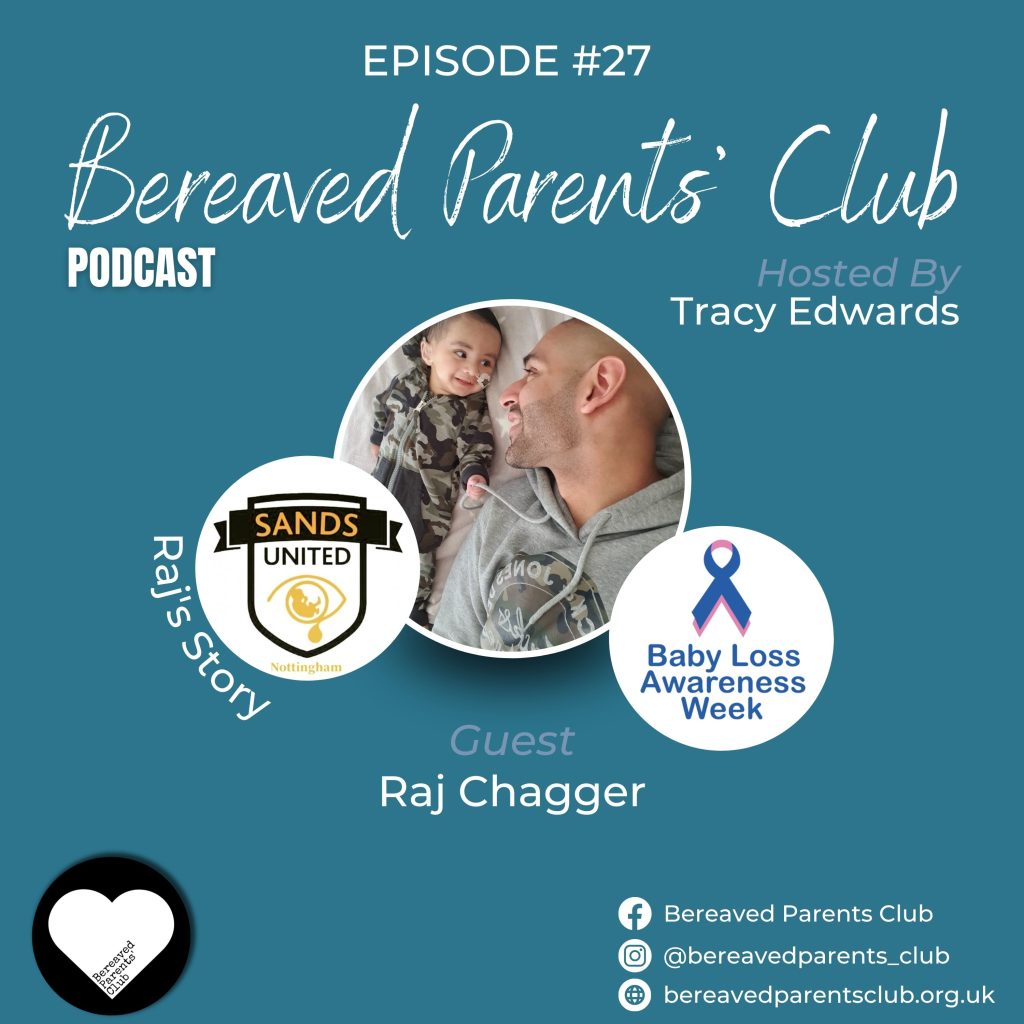
Episode Guest -Raj Chagger
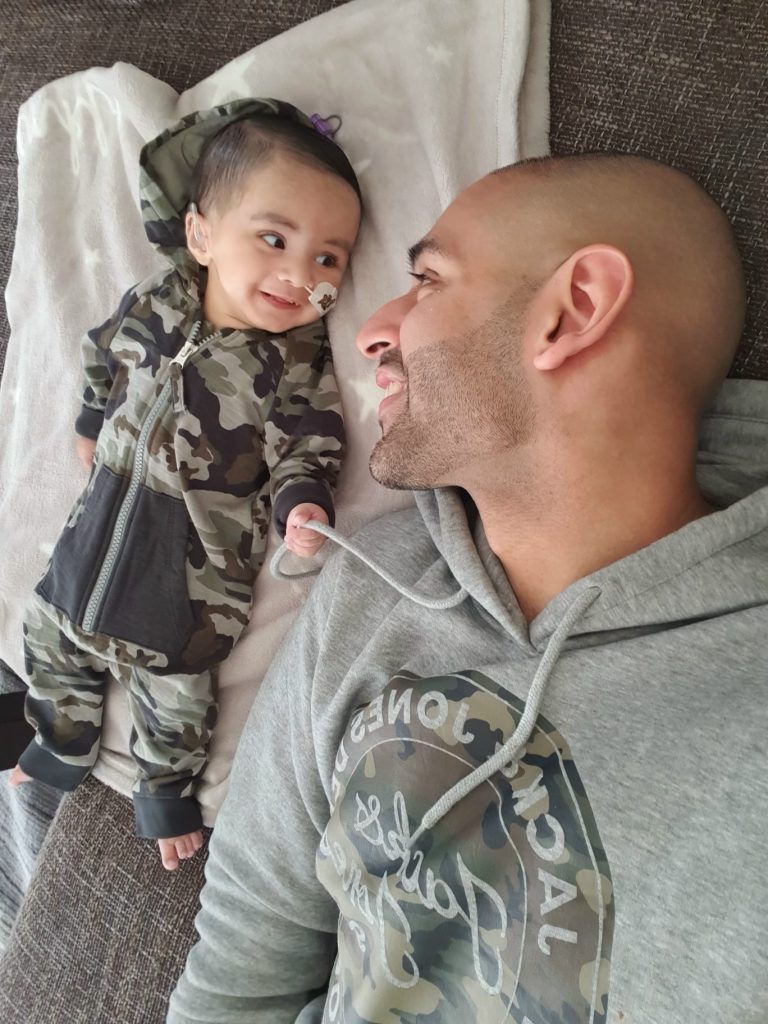
Raj is a bereaved dad, advocate, and trustee of Sands who has been supporting and helping other bereaved dads since the loss of his baby son, Riaan, in November 2020.
Experiencing baby loss firsthand Raj has used his personal experience to improve awareness, support, and understanding for bereaved families.
Raj is founder of Sands United FC Nottingham charity which he set up in 2023 and now has a membership of over 70 bereaved dads. Raj and his wife Sharan setup Riaan Remembers in honour of their son to provide support for other bereaved families and using their shared experience they provide training to NHS staff around baby loss to ensure that parents and families are treated with respect and dignity and understanding and the need for longer term support for families affected by baby loss.

Summary:
In this episode, we speak with Dad Raj about the loss of his baby son Riaan and the long search for answers after his death at seven months old. He shares the medical issues Riaan faced, the events of the night he died, and the recent understanding that Riaan had a very rare genetic condition.
Raj shares how he started Sands United FC Nottingham to provide support for other dads who have lost a baby. Raj explains the purpose of the charity he set up with his wife Sharan in honour of their son Riaan Remembers and how the charity supports bereaved families and provides training to NHS staff to better support parents in baby loss. In Raj’s role as a trustee he recently delivered a letter to Downing Street to call for action to improve the racial inequality in baby loss.
Raj talks about the football sessions, peer support for bereaved dads and how often the dads are overlooked and we need to be more open in conversation to better support Dad’s as well as the Mums in baby loss.
Resources:
https://www.facebook.com/p/Sands-United-FC-Nottingham-100089047887650/
If you would like to see if there is a Sands Football team in your area please visit the Sands United web site here
Follow us on:
Episode 27 Transcript:
Raj’s Story
[0:10] Welcome to the bereaved Parents Club podcast. It’s a club none of us want to be a member of, but here we are.
[0:18] My name is Tracy and I am a bereaved parent to George. This podcast is for all of us to share and celebrate the stories of our children and offer support to each other. Each episode will explore topics that are relevant to us as we navigate the world as bere parents, whether your loss was last week last month last year or even last century you are welcome here, and whether your child was a baby a youngster a teenager an adult or even a parent themselves you are very welcome here please be aware that this episode will deal with themes of death and loss, So here we are welcoming Dad Raj and founder of Sands United Nottingham and Riaan remembers for a very special episode which will be launching during Baby Loss Awareness Week 2026. So welcome Raj.
[1:22] Hi Tracy, thanks for having me on.
[1:25] And I wondered if you would like to start by sharing your story.
[1:30] Yeah, absolutely. So in April 2020, me and my wife had a little boy who we named Riaan. So Riaan was born at the height of the first COVID lockdown and probably halfway through the pregnancy, he was measuring quite small. And we ended up having to go into hospital quite routinely for scans and growth scans just to see if he was catching up to where the doctors would expect him to be. And I guess for the last three, four months of pregnancy he didn’t really catch up and we just kind of assumed that he was just going to be a small baby my wife’s not, she’s quite small herself so we weren’t overly concerned, obviously any size issue does stay in the back of your mind but there’s nothing alarming about it to us, we just thought okay he’s going to be a small baby due to the size concerns my wife Sharan had a planned c-section so Riaan was born on on the 6th of april 2020 and he weighed just over four pounds when he was born and we kind of gone through that whole pregnancy expected him to be like a small baby but when you actually see a four pound baby you don’t realize how small how small of a baby that is um so because it was covid i was allowed to be there for birth um and then and then stay for a
[3:00] I didn’t see Sharan or Riaan for a week after he was born.
[3:05] So the day after he was born, they did a heart scan, which uncovered two holes in Riaan’s heart. So Sharan had to have that information herself, and then she would have to call me to relay the information. And we were told at the time that the likelihood was that he would need open heart surgery to close those two holes. And…
[3:30] He actually, over the course of the months, those holes closed themselves. So he didn’t need to go down that route, thankfully. But then the day after that, they did his hearing test, which he failed. And we later found out that he had bilateral hearing loss. So from about three, four months old, we were almost wearing hearing aids. And that news took us back quite a lot. So no one in our family has any issues of hearing loss. and initially we were like how is this going to impact his life and you know what would it mean for him growing up and how things would things be more difficult for him but as time went on we kind of realized that how easy or difficult it is will it will be down to us right what is our attitude towards it and we ended up taking quite a positive attitude towards it and and you know people go on to live very very normal lives yes with it with hearing loss so we we know we spoke about learning sign language just in case there were times where he couldn’t wear his hearing aids or if he lost his hearing aids we’d still be able to be able to communicate with him so yeah there’s two things right so yeah there’s two holes in his heart and then the hearing loss um
[4:44] And another reason he was in for the week was because of his size and he didn’t really put on much weight over in that first week either so they just wanted to keep an eye on it through the course of Riaan’s So Riaan passed away in November 2020, so age just over seven months old.
[4:58] And throughout his seven months, he struggled to put on weight. So we tried everything. We tried all kinds of different formulas, bulking agents, everything to try and help him put on weight. In the end, he was fitted with an NG feeding tube to just help get some more volume into him. But even that, it wasn’t working. We had every test you can think of done and nothing was coming out with anything
[5:26] And then we had a consultant at the time and he suggested Riaan have an MRI scan Now that uncovered a small pituitary gland on his brain. So the pituitary gland is responsible for secreting growth hormones. So we got that phone call and we’re like, okay, maybe that’s it. Maybe that’s why he’s struggling to put on weight because this gland is small and it’s not giving him the hormones that he needs. So we kind of made an early plan to bulk up his hormones through injections. So we got that phone call. We were like, okay, maybe there’s a reason now. Now we’ve got our plan forwards.
[6:05] Um that same day we had that phone call is the same night that Riaan passed away so kind of on the day we thought maybe there’s something here that’s the day that that we lost him um and on the night it was just like a very very it was a very normal night so i put him to bed and i came downstairs and looked at the monitor and it just looked like he was he was being sick and because he had the ng feeding tube he occasionally was sick because like the volume was more than you know his little stomach could handle um so i went upstairs just expecting to have to clear some sick up and reset a limit and put him back down but when i got up there he wasn’t actually being sick he was foaming at his mouth
[6:53] So I picked him up, called Sharan upstairs, and obviously it didn’t look right. And as I was holding him in my arms, he was changing color. And so we called 999. Sharan had to perform CPR on our bedroom floor. The ambulance came. They came quickly, although it felt like forever, but they came quickly. And we were kind of rushed into hospital. And Riaan was taken into a room. We were taken into a separate room. And whilst whilst the medical stuff tried to try to sustain him and then we were asked if we wanted to go into the room and sorry before that the lady who was in the ambulance with us she was in the room the separate room that we were in and she kept asking us she wanted us to call our parents and we were like no let’s just see what happens there’s no point worrying anybody and looking back it’s like kind of feels like she knew and she was like preparing us to like have to have to break that news um
[7:54] So yeah then we were allowed back into the room where we are and was being resuscitated um and at one point the doctors came up to us and he was like you know we’ve been going for so long even if he comes back now he’ll never be the same and you know eventually they had to stop and and one by one um the different medical staff in there left the room and left us to kind of have some time, have some time with Riaan. So yeah, it was literally like, and in between me seeing him on the monitor and then stopping resuscitation was less than an hour. So like everything changed for us in that one hour period, right? It just started off as a very normal day with a phone call that we thought was positive and, you know, we ended up with, you know, us very sadly losing Riaan that night.
[8:47] So much, so much trauma and all the things that you’ve gone through. And then the trauma of that as well on top, it’s just so much, isn’t it? So much.
[8:59] Yeah.
[8:59] And your first baby as well. Yeah.
[9:01] Oh, my goodness. And it took, I mean, it took a long time for us even to get a reason as to what happened. It’s only really in the last year, it’s been six years now, it’s only really in the last year that we’re starting to get an answer. And basically, Riaan had a very, very rare genetic condition. So he was one of about seven eight maybe in the whole world to have had whatever it was at the time it had no name no cause no cure um nothing no one could tell us anything the doctors kept some like blood samples and muscle biopsies and there was a team in america that did this whole investigation into it um and you know now they think they have found a condition and there are a few more people that are showing the same kind of symptoms that Riaan had although Riaan had a very severe version of it so there are people who had the same um symptoms and and the same kind of genetic spelling mistake who are still living and you know with with kind of muscle weakness and additional support and they’re still living so Riaan had quite a a harsh version of the condition still no name but a lot further along the process in being able to identify what it is and being able to test for it in the future.
[10:15] Yeah. I mean, it’s so important, isn’t it, to have that knowledge and understanding. It’s just so important, isn’t it, to know.
[10:25] Yeah yeah and even so we have a little boy now another little boy whose name’s Ari and he’ll be three next week but even when we were talking about like do we try again at the time there was nothing they could test for so like we were kind of taking a leap of faith when we tried when we tried again because no one could tell us that it’s not going to happen again um and you know they they would tell us that it’s very very low stats but the probability of it happening is very very low but when Riaan is one of like eight in the whole world then like even 0.0001 it feels like a massive massive figure um yes so you know thankfully we had ari and and he’s okay he’s not like showing any of the same symptoms um as Riaan did and Sharan is pregnant now as well so we’re due in january um and you know we’ve been able to have early scans and such and and touch wood, everything’s looking okay.
[11:22] Good, good. Because even though I’m going through another pregnancy as well, like you say, you’ve got all that work because of what you’ve been through as well. It must be really traumatic and hard.
[11:32] Yeah, we’ve had four miscarriages along the way since Riaan as well. So, you know, experienced baby loss in various different forms, but obviously all of them as our babies.
[11:44] Yes, yeah, absolutely. So where did you turn to after losing Riaan? What support was available for you?
[11:52] Um…
[11:54] Not much, not much. For me, it took me a long time to seek the support that I needed. I don’t think I realized exactly what it was that I needed, but I went through a long period where I just kind of shut myself off from everyone. I didn’t want to talk to anyone. I didn’t want to be around anyone. I didn’t want to talk about it. I would kind of get into bed at 10 o’clock and it would be like 5am before I’d fall asleep because there were just things going on in my head. Like you just question everything like did you miss something could i have read something could i know went upstairs five seconds quicker could i have got the ambulance got up the stairs five seconds quicker would it make a difference and all these things just go round around in your head um and in the end i ended up having a year’s worth of counseling so i had quite a be a level of ptsd on the back of it and and that you know that kind of got me to talk whereas i probably didn’t before i had like like quite a big friend group but only a very small percentage of them who i would actually like be honest about how how i was feeling i kind of the way i i got through those early months and years was just trying to do stuff in in Riaan’s name like things to things to give back um just you know so his life meant and still continues to to mean something and to be able to like father him in a very different way
[13:24] Yeah no absolutely it’s so important isn’t it to honor our children and yeah find ways and also find things that, give you a purpose I think as well it’s really really important isn’t it and key.
[13:38] Yeah absolutely so it gives you a reason to keep going when you when you have every reason not to you know you need something that that keeps you going
[13:47] Yeah absolutely so how did it all start then with Sands United Nottingham
[13:52] Yeah so I probably like most dads men who go through baby loss you very quickly find there was very limited support out there for you um there’s there’s no there’s there’s support out there for moms and you completely understand why there’s stuff out there for couples but just something that’s tailored to what a dad needs and even that is very different from dad to dad but just something that that covers that the male aspect of it was really really lacking um and that’s probably a big part of how I ended up in in the position that that I ended up in. So I just… I guess I wanted to create the thing that I needed in those early days. The Sands, as a national charity, they, you know, supported me and Sharan through kind of the resources that provide through their social media. You just kind of see posts and they just kind of get you and you get what people are trying to say.
[14:49] And then I actually reached out to Sands to ask them if there was a… So basically, the Sands United seems to exist all over the country. Um they’re set up by kind of people like myself and i just sent a message through saying is there one in nottingham um and they said no but why don’t you start it so i already had like a good relationship with Sands from like various volunteering and stuff that i did with them so i started it he literally was as simple as that and say why do you start it i’m like okay i’ll do it and and in in march 2023 um is when we kind of formally started yeah and so a couple of years after we lost Riaan. So Riaan passed away in November 2020. And then between November 2020 and March 2023, when I started the team, I probably spoke to four other dads gone through baby loss.
[15:40] Were they all local in Nottingham?
[15:42] No, just random, just through social media. And then from March 2023 to now, 100 plus. Way over 100 dads that I spoke to. And it just shows you That this is needed, right? That people have just been waiting for something to exist. Like a forum that they can relate to.
[16:03] Yes.
[16:04] And something that they can see as their method of support. Yeah.
[16:10] I always say like when you think about typical mental health support groups, you kind of in your head, you picture people sat in a circle and you kind of take it in turns to stand up and introduce yourself and explain why you’re there. We have nothing like that. We’re just so informal. There’s never any pressure to talk about anything that you don’t want to talk about. But if you want to talk, there are people there. So yeah we started March 2023 we’ve had our first ever meetup there were five of us and we literally met up in a park down the road we took a football and we just kicked the football about and then we just every now and then you stop and talk and say a little bit about yourself personally about your experience of loss if you wanted to but there was no pressure to do so it was just very very informal um three and a bit years later there’s over 70 of us now um
[17:04] 17 your club.
[17:06] Yeah yeah 70 in
[17:07] Your club yeah nottingham.
[17:11] Oh gosh yeah so we’ve grown and again i think that just shows how many people are waiting for for something like this to exist and we’ve got people from all different walks of life different ages background stages of loss i’ve got people who lost their baby within the last month i’ve got others who lost their baby 30 years ago and and you know the pain doesn’t go away and you can see it from from yeah from when you speak to these guys you can see the pain is there
[17:35] I just wanted to go back on when you said about you know sort of being in a circle and, you know everybody’s sort of saying their name and and say and explaining sometimes that’s just too much isn’t it for for for a bereavement and a loss like this.
[17:51] It is it kind of puts you with the pressure right when you may be not even ready to talk i think that the thing about i guess any kind of loss is that You need to be ready to talk for it actually to be impactful. If you’re being forced to open up, it doesn’t work.
[18:06] So how do you manage that with regards to the fact that you have over 70? Are they all active in playing football? Do you play games against each other? I know there’s some kind of league out there, isn’t there, with various teams?
[18:18] Yeah. So what I always say is we’re a mental health support group first and a football team second. So football is just the tool that we’ve used to bring each other together. But you never need to have kicked a football in your life to be part of our group. You never need to kick a football once you’ve joined. Football is just a form of exercise. As Paul has said, you know, the universal language of football is how we brought so many people together. And we have people from very different levels of activity. Some people need it more than others. Some people need to come. So we have a weekly session. Every Wednesday at half seven, we meet up, play football for an hour, and we talk during the football, and we talk after the football as well. Some people need that every week some people need it less it is just as in full month as if you need to come come if you don’t need to it’s fine matches wise we pay twice a month and we play against other charity football teams generally we also play against like local police the local fire service we play against a local football not Mottica Forest had a community group we played against them but generally it’s other charity teams and you know we just make it work with however many people we have we give everyone the same amount of time on the pitch it doesn’t matter how good or bad you are you are there to represent your baby and and win or lose is irrelevant our result is the fact that we brought these people together we’ve met each other and we’re going out going out to celebrate and honor our babies together
[19:48] I was just going to ask do you also extend that to dads who are me you know maybe they’ve lost a toddler or a child or is it purely baby loss or is it any child loss?
[20:02] So I would say most if not all of us are like baby loss so my boy was was seven months when he passed away and and we’ve got you know every kind of baby loss you can imagine we have in our team but you know we i get messages from from people who have lost older children as well um more so just seeking well not even seeking just looking like trying to find someone to talk to as opposed to looking to be part of our team just someone that they can like if they’ve got something on their chest just someone who they know will understand what they’re saying if that makes sense, someone who you could just reach out to as a stranger sometimes it’s easier to open up so just an outlet is what they’re looking for
[20:52] Yeah, yeah. But it’s so needed, isn’t it? You know, at your sake, there’s very little out there other than, I know there’s sort of general groups, or they may get a small grassroots charity that’s been set up by other bereaved parents. So that might be in your local community, but there is nothing else,
[21:12] right? This is a nationally, really.
[21:14] No so we actually me and my wife we have our own baby loss um awareness work that we do call re-honored members and that’s i guess not like not tailored toward dads the way Sandsee nottingham is that’s a general um like child baby loss bereavement support where again we provide that peer-to-peer support to bereaved parents and then we go around hospitals and we deliver training sessions on bereavement care we talk about what went well for us what didn’t go well for us in our bereavement support in the hopes that every baby who we lose is treated respectfully and every parent who has to go through what we’ve gone through is also treated respectfully and supported not only in the early days but in the longer term as well
[22:03] Yeah because that’s the thing isn’t it um it just makes such a difference doesn’t it i mean i had when I was my son, I had no support from my GP. Nothing, nothing. Yeah. And depending on the circumstances with the hospital and just what you’ve
[22:23] been through as well, in the hospital as well, it’s so important. Do you think it’s improving? I mean, have you seen, because obviously you’re doing a lot of work, like you say, going into hospitals, are you seeing an improvement?
[22:35] I would say… Yes, but I don’t think it’s consistent enough yet. I think it’s very much dependent on who’s working that day, right? What member of staff is there and, or even what mood they are in, what kind of day they have had, because that will impact the way that they provide their support as well. I feel like baby loss in general is becoming more talked about. There’s obviously been a lot of media attention on it recently with various reviews. But to say how often it happens… It’s surprising that there isn’t a more consistent support network out there or even like training like is there a consistent training being rolled out to staff who are specialized to work in baby loss support because if there was you’d think that that level of care would be more consistent but as I say I’ve got over 70 guys in my team and everyone will give you a different story like about their level of experience yeah
[23:39] Because like you say it’s not just about what happens in the immediate is it depending on parents circumstances it’s sort of what happens when, they have another pregnancy and how that is handled because of what they’ve been through it’s so intertwined isn’t it.
[23:57] Yeah i will also say like i think when we lost Riaan we’re very fortunate that we were supported really well by our child bereavement team can’t fault them at all even today they they will send this card on Riaan’s birthday just to acknowledge it and it’s you know six years on which is incredible um when we had our miscarriages the support was less good like it kind of felt like you were there for like you’re at the dentist appointment or you’re coming in to lose your baby that’s that’s what we felt like when we were at the miscarriage clinics and i get it right the staff there they’ll see it you know that they’re working on a miscarriage ward essentially right so they see it every day but they don’t realize that for that person as an individual’s coming in there for a very very heartbreaking reason you need to have an empathy that lasts the whole shift to be able to support these people and it’s not always there i don’t think
[24:51] Yeah i recently did a podcast with lucy from elles gift so that is an app that helps parents through stillbirth, miscarriage and baby loss. Well, it was primarily for TFMR, but Lucy was saying as well that sometimes it, it can just be so medically delivered without, like you say, the empathy or just because, you know, that baby is their baby.
[25:17] Exactly.
[25:18] Yeah. And just with the work that you’re doing in the hospital,
[25:23] we mentioned about, you know, with Riaan Remembers and going in and talking to the hospital. I believe that you recently also went to Downing Street and delivered a letter as well.
[25:33] Yeah. So that was as part of Sands wider work to try and end inequalities, baby loss and the support provided afterwards. So like the stats show, if you’re from a black or Asian background, you’re more likely to lose your baby. And the level of support that you receive is also statistically likely to be at a lower level. So we kind of collected some signatures, delivered them to Downey Street in the hopes that something happens on the back of it. And there’s lots of different opinions on why those stats are there. The main kind of outcome is that those stats look a little bit better. And that every parent, regardless of background, that finds themselves in our position receives the same level of support afterwards. Words and anybody who find themselves pregnant can kind of go into that knowing that they are not more likely to lose their baby than anybody else.
[26:36] Yeah. I mean, Debbie did a podcast with Pete, Dad Pete, and he showed his story for Black Baby Loss Awareness. And I was just in tears. I was absolutely devastated when I heard him read out the stats. And so I was, yeah, it was shocking. It was shocking.
[26:53] Yeah. And again, it’s one of those things where people don’t know the stats.
[26:58] Yeah, I had no idea.
[27:00] And it’s uh you know i said it before like baby loss in general is to say how often it happens as a society we just don’t know enough about it and we don’t know how to approach the conversations about it but hopefully we can change that right through kind of your work that you’re doing now and you know the amazing what the other bereaved parents are doing to kind of give back in their baby’s name we can kind of change the attitude towards it
[27:24] Yeah it’s just being able to have open conversation isn’t it being being seen and being heard as well it’s just really important isn’t it.
[27:31] Yeah i think we just need to know that as you say we are we’re allowed to talk about our babies and we’re allowed to talk about how it how it makes us feel without worrying about making other people feel uncomfortable
[27:44] Yeah definitely and i love the work that you’re doing as well we’ll go a long way to help with that as well raj.
[27:49] Hopefully hopefully yeah so
[27:54] I know you mentioned that you went with the letter, so that was representing Sands. Is there other things that you’re doing for Sands as well?
[28:00] It sounds like you’re very active in Sands.
[28:02] Yeah. So, so I’m a board member of Sands now, as of about six months ago, I think. Um, it’s funny, I, so Sands did an away day, um, earlier on this year and I kind of talked about my journey with Sands and it kind of, it started off with me simply sharing their posts on social media that’s i’d read something and be like oh that i really felt that so i’d share it on our members social media
[28:28] And then sometimes i’d read one and i’d be like i get what you’re saying but it’s not quite hitting me right there and i think there’s a bit more that i could put some kind of a different spit on it to that might help reach out to more people so i started writing my own stuff like my own poems my own blogs my own posts i would go to Sands and i’d say i’ve written this which i’d share it and then Sands would share it and then i kind of do different volunteering stuff for them so they’d invite me to do like media stuff so i’ve done a few like radio interviews with them i’ve written articles for their website there’s another baby love charity called tommy’s i did a podcast with them they created a dad’s hub um a couple of years ago so i was part of that process as well to really anything like sands was so good to me so every time sands have something they know they can come to me and i’m not going to say say no to to the support and you know being invited to to be a board member was an incredible honor um and it allows me to to kind of bring my thoughts more to the national work that they’re doing so i really appreciate and giving me the opportunity.
[29:44] Yeah. I mean, I think it’s so important, isn’t it, that for any more newly married parents who were reaching out, who were looking forward, for just things that sort of resonate with them or maybe just they need to identify with somebody else that’s gone through a similar experience. I remember when I first lost George, I trolled Instagram and I just was looking, for me at that time because George was my only child. I was looking for people who were further on that had survived it because at the time I didn’t think I could survive it. So it’s just so important, isn’t it, that an organization that sounds that they use um parents voices like yourself and that is just so powerful and, it just gives opportunity for other parents it will resonate more and it will mean more because you’ve been through it and you’ve been through your own loss, and they can identify with that.
[30:43] Yeah and i think when you lose a baby you kind of feel like you’re the only one in the whole world that happens to and everywhere you look you see other people with their babies and it’s just really important that you’re not you’re not on your own
[30:57] And as this episode is going out during Baby Loss Awareness Week, I just wondered if there was anything you could share because you’re further along in your journey. Obviously, this is a lifelong journey.
[31:08] Yeah.
[31:09] With other parents, especially maybe more newly bereaved parents who have lost a baby.
[31:14] Yeah. I would say don’t try and compare your story to anybody else’s. Don’t compare your experience of loss to anybody else’s and therefore don’t try and plan your journey through healing the way anybody helps us because it’s very very different like every experience of loss is different and every baby was there was there an individual and therefore the grieving process will be an individual one as well there’s no right way to go about it some people will want to talk and they’ll be very open about the experience of loss and some might talk straight away, some might take a little bit longer for them to open up about it. Some might not want to talk at all.
[32:02] And there’s no right way around it. You kind of have to figure out what works best for you and then stick with it. You’re on your own. I mean, you’re on an individual journey, right? And then you’re on a journey as a family as well. But you have to remember to look after yourself as an individual because Me and my wife had very different like career processes and our journeys since have been different too. And we’ve gone about it in very different ways. We’re aligned in a lot of ways. Different in a lot of ways too but that’s not not to say that one of us did it right and one of us did it wrong it’s very much your way of doing it and and you will come across people in your life that won’t want to talk about your babies that will kind of never bring them up people you may even expect that would bring them up they won’t bring them up And that’s okay. And we can’t fault anybody for doing that because baby loss is a very difficult topic to approach. And if you find yourself in that position, don’t take it personally. Don’t make that stop you from talking about your baby. Because there are people out there that want to listen. There are people out there that want to hear you speak your baby’s name. And there are people that will speak your baby’s name without you speaking them first. And when you find those people hold on to those people because they will be on that journey with you for life
[33:31] Yeah what’s really important thank you for sharing that and sometimes it may even be people who are close to you who don’t want to talk about it exactly it may be a family member it it can happen told to yeah.
[33:44] It can it can yeah and that’s why you will 100% meet those people in your life but you will also meet people that will hold your hand through all of it what i’ve
[33:53] Found is i’ve met people who have never met my son, um but they you know they ask me questions and they want to hear about him so it’s people you know as you go along it’s like in people that you meet right through maybe joining sons united football team this you know there’s just different avenues isn’t there as you journey through life um it can surprise you 100.
[34:16] So we’ve been going through in a bit years now i would say i’m closer to these guys than i am to people i’ve known for 20 years you know we’re bonded through the post tragic of of experiences but we’ve formed a real like brotherhood on the back of it yeah
[34:33] I mean I found that being with you know being with other bereaved parents in a similar circumstance to myself it doesn’t matter if there’s silence it doesn’t matter if somebody is in tears it doesn’t matter you just sort of, I just don’t think you have any of the constraints or strain that you may have in worrying about upsetting somebody. You can just be, and that’s enough.
[34:59] Yeah. Sometimes you don’t need the words right. It’s just a look, and you just know. You just get each other. There’s a real light. There’s something really powerful about that. Yeah.
[35:08] Yeah. And during Baby Loss Awareness Week, I believe there’s some special events as well that go on. There’s candle lighting. So is that at the end of the week, Raj, or at the beginning of the week?
[35:19] It is. So there’s a wave of light, which is on the 15th of October. So it’s at seven o’clock on the 15th. We hope that everyone is asked to light a candle in memory of all the babies who we’ve sadly had to say goodbye to far too soon. As a team, we’re doing something as well. So we’re doing this kind of week-long campaign called Questions Nobody Asked Dad, where Every day of the week, a different member of my team is going to answer a very difficult and personal question. And it’s a question that people just don’t ask that. And we’re going to answer them. We’re going to answer them very openly and honestly. And a different day, every week, a different member of our team will answer that question.
[36:04] Yeah. Gosh. And will that be shared out on your social media pages? Yeah.
[36:10] Yeah.
[36:10] Okay, we’ll look out for that. Yeah. Yeah.
[36:14] But I think that’s one thing I don’t know from being a dad, Raj, is it’s often sometimes, you know, there’s a focus more naturally on the mum and, you get forgotten about in sort of people checking in on you and asking because they’re expecting you to look after your wife as well.
[36:30] Is that a common thing? A hundred percent. Yeah. And it goes back to what I was saying at the start about the reason why I created Sands United Nottingham is because, you know, one of the things is there’s no tailored support for dads and you do get a forgotten amount. I’ve got guys in my team that have told me that when they’ve been in rooms with bereavement support teams, they don’t even look at them. They don’t acknowledge them. Everything is directed towards the mum. Nobody asks how they are. They’re just expected to get on with it. A lot of my guys will tell you that they’ve never cried in their houses about their losses. They’ll cry in the car, they will dry their eyes, and then they’ll come into the house so no one sees it happening because they don’t feel they can. Because they don’t feel like they don’t feel safe they don’t feel comfortable to do so because there’s a perception on them that they have to hold it all together and that’s the perception we need to change because you’re a parent too right just because you’re a male you’ve still lost your baby and you have every right to feel broken and you shouldn’t ever feel ashamed for saying i’m broken
[37:36] No absolutely that we need to change that don’t we and we need to change that by having more open conversations as well.
[37:43] Yep, 100%.
[37:44] Yeah, definitely. Well, thank you so much, Raj, for sharing that today and for sharing everything about Sands United, about Riaan Remembers and your experience as well of Riaan. I think it will resonate with a lot of parents and it will help a lot of parents, especially maybe some parents who, were earlier on in their baby loss or parents who have just not had the opportunity of maybe being able to because, like you say, you said before that you’ve had parents who are 30 years on but there just wasn’t anything there it was just in society there was nothing years ago so it’s incredible what you’re doing and it’s just so needed and so important as well it’s out.
[38:30] There so thank you thank you for having me I’d really appreciate it and you do an amazing work raising awareness of baby loss so please do keep it up
[38:39] Yeah I think when Debbie started the podcast and I’m sort of more in support but I’ve I’ve had a go this year. We wanted to share stories from all losses and also maybe to give a platform for people that wouldn’t normally be given a voice as well, of all circumstances. Absolutely. And it’s just so important to us, and that’s something that we’re trying to ensure that we do and that we build up a resource that’s there for everyone.
[39:05] Yeah, that’s incredible work.
[39:07] Thank you. So I just have one last thing to ask you, Raj, if that’s okay. We also like to enter the lights and notes so it can be as silly or as flimsy as you like but I just wonder if there was anything you were grateful for today.
[39:23] And that’s a very easy answer for me. So it’s Ari, my little boy, even whenever I have the longest day imaginable, when he comes home from nursery and he’s just like, dada, dada, and he just pulls your hand and he wants to play with you, it just makes everything. Like, you put everything into perspective, right? When you have that. And him coming into my life just kind of gave me an even more push to be the best version of myself that I can be, to make him and his big brother, Rihanna, and now we’re expecting to get all my children proud and he goes a long way in helping me be the person that I am.
[39:59] Yeah. Well, you’re a wonderful daddy as well. Thank you.
[40:03] This episode is dedicated to Riaan.
[40:20] Thank you for listening. We would be grateful if you could share the podcast amongst your community. Or if you could give us a like on the podcast platform you’ve listened on. Or you can follow us on our socials. We are on Instagram, Facebook, YouTube, Threads and TikTok. Or for more information, you can visit our website, bereaveclearanceclub.org.uk. Thank you.